Open publication - Free publishing - More politics
Posts
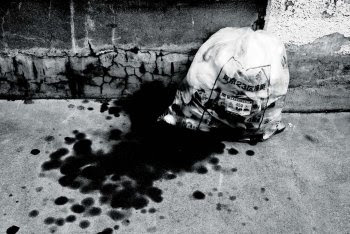
New Market - The Waste Trade by Willhemina Wahlin A new, lucrative market is emerging in world trading, and it’s not high-end technologies or virgin natural resources. It’s rubbish. As developed countries increasingly sink under the pressure of growing consumer waste, China is fast becoming the highest bidder in the rubbish trade, often undercutting local recyclers for the pick of the pile. Behind the waste grab is the growing Chinese economy’s appetite for the resources that recycled products can deliver. More This article was originally published in the December (83) issue of J@pan Inc Magazine. Cover illustration by Phil Couzens/J@pan Inc. Photo Courtesy of Ruben Frosali.

Can Japan Please Stand Up? Japan’s bid for a UNSC permanent seat: pipe dream or viability? July 3, 2008 J@pan Inc Magazine Articles Magazine No 78 By Willhemina Wahlin and Dr Kaoru Natsuda There seems to be one point agreed on by almost everyone when it comes to the United Nations Security Council: It’s a time capsule of the post-World War II global power structure, hardly representative of the 21st Century political landscape, and reform is badly needed. But here the consensus comes to an abrupt halt. The sticking point: everyone seems to want an expansion of the permanent seats available, but no one can seem to agree on how many, and to whom the honor should be bestowed upon—and why. Japan has long been campaigning for permanent membership of one of the most exclusive clubs in the world, but it has an uphill battle ahead if it is to convince its closest neighbors that it deserves one. But the real question is, does anyone really deserve a seat? More This article was originally publi...

One Village One Product Japan's entrepreneurial scheme goes abroad B y Willhemina Wahlin and Dr Kaoru Natsuda The One Village One Product (OVOP) scheme is a way of rethinking the possibilities for small, rural populations, introducing ways to re-brand what they do best. Founded in the Kyushu prefecture of Oita over 20 years ago, it’s now being exported to some of the world’s Least Developed Countries (LDCs). Still riddled with challenges, its greatest potential is the entrepreneurial independence it encourages in many of the world’s poorest communities. More This story was original published in the January 2008 issue of J@pan Inc Magazine. For subscriptions to the magazine, go to: http://www.japaninc.com/mgz_subscriptions Thanks for the support! Images courtesy of JICA (Japan International Cooperation Agency)

Women in the Workplace Profiles of Professionals By Willhemina Wahlin In Japan, the ‘concrete ceiling’ as it’s commonly known, is still a major stumbling block in the career trajectories of many women. Still a predominantly male-dominated society, it’s not surprising that Japan, which rates seventh in the United Nations Human Development Index, only made it to 69th in the same report’s Gender-related Development Index, and 42nd in the Gender Empowerment Index for 2006. Slow as it may be, change is on the way. Feeling the squeeze from all sides, including low birth rates and an ageing population, Japan’s severe underutilization of women in the workforce no longer makes any good economic sense. What’s more, many are realizing that the type of management that women can provide could well be the key to once more unlocking Japan’s economic might. J@pan Inc spoke to four women who have enjoyed success in fields as diverse as government bureaucracy, business and non-profit organizations. Th...

Opening Japan's Skies: Part 2 By Willhemina Wahlin The British carrier, BMI, is a good example of just how lucrative the trading of airport slots can be to the aviation industry. Mott McDonald's Director of Aviation Strategy, Laurie Price, who was invited to Tokyo in July by Tokyo University's International Transport Policy Research Institute in the Graduate School of Public Policy, explains that in BMI's case, it's key value is in fact its slot allocation. 'The value of British midlands BMI—the main value of BMI - is its 11 percent holding at Heathrow, which is probably worth somewhere around 300 million pounds.' More This is part two of the two part series on Japan's aviation industry, first published in J@pan Inc Magazine on 1 August, 2007. For Part One, go to: http://www.japaninc.com/jin424 Illustration: Willhemina Wahlin

Opening Japan's Skies: Part 1 By Willhemina Wahlin Since the first manned flight on December 17, 1903, when the very brave—or very insane—Wright Brothers managed to stay aloft in their prototype plane for a mere 12 seconds in 27mph wind, the aviation industry has grown into the singularly most important bridge between people, save for perhaps the Internet, of course. But today, the pressure on what has traditionally been a flagship industry for individual nations is under increasing pressure to liberalize. More This article was first published as a two-part series in J@pan Inc Magazine on 25 July, 2007. Illustration: Willhemina Wahlin

National Treasure Protecting Japan’s Intellectual Property By Willhemina Wahlin In April this year, Japan saw the first group of retirees put their feet up en masse. The ageing population poses more of a threat to Japan’s economy, however, than merely the provision of pensions. A steep decline in the nation’s available labour force, if left unchecked, could lead to the demise of Japan’s international economic competitiveness. So what can a nation, faced with such a looming crisis, do? The government’s answer is to turn Japan into an “Intellectual Property Based Nation.” Although never short of an idea or two, the challenges lie beyond the proverbial light bulb above the head – the real issue is how to speed up the process of patent examinations, create a harmonized global patent application process, and expand the ways in which patent licenses can be exploited. Oh yes, and faster litigation, litigation, litigation. This story was originally published in Japan Inc's 2007 Summer Is...
Powering up a Nation: Energy Security in Japan and Australia by Willhemina Wahlin This year marks the Australia-Japan Year of Exchange, which celebrates 30 years since the signing of the Basic Treaty of Friendship and Co-operation. Back in 1976, Japan, still reeling from the first oil shock of 1973, was forced to revise its approach to energy security. Australia’s oil supply, on the other hand, remained largely uninterrupted, which did little to encourage any rethinking of energy policy. Fast forward to 2006, and the energy situation is looking no better. The peak oil debate and increasing tensions in the Middle East have pushed up the price of crude, and just about every natural resource is in high demand and tight supply. Meanwhile, global warming is presenting unprecedented challenges for governments worldwide. It seems, then, an appropriate time to compare the energy security and climate change policies of Japan and Australia, and to look at what solutions they may be able to offer...

Power Sourcing Japan's Race for Resources by Willhemina Wahlin and Kaoru Natsuda It's only natural that in light of the high level of consumption in the developed world in the last 100 years, something was going to have to give. Now, in an increasingly unstable world, where developing nations are quickly developing and developed nations are quietly panicking, governments are beginning to take the idea of resource security very seriously indeed. Japan, one of the world's most resource-poor countries, recently unveiled the New National Energy Strategy (NNES) - an aggressive plan to procure sources of energy to keep its economy humming. The Japanese will use their expertise in energy-efficient technology and such things as Official Development Assistance (ODA) and the Kyoto Protocol's Clean Development Mechanism (CDM) to exploit other countries' energy sources. But they must work quickly. Geopolitical lines are already being drawn in the sand. Japan may have to sacri...

Anti-Social Insecurity If you haven’t taken a good look at the US government’s plan for social security, and you’re under 5 0, then you ought to. The White House website is a good place to start, but don’t get bogged down by the rhetor ic before you get to read between the lines. President Bush claims that he will listen to any good idea, save raising payroll taxes, to save the pension system. Well, if gove rnments really want to look at what will happen to people when they’re old, I make a great case study of what to expe ct. First of all, I’m Australian, and we have been under the grip of Superannuati on for almost as long as I have been working. However, back when Superannua tion was introduced, the majority of workers could still work under relatively fair labour law s – that is, if you worked over a certain amount of hours a week, there were regulations wh ich stipulated you had to be hired full-time, and all of the benefits that this ensured, such as sick days, holidays, and, so...

Murder, if by any other name... A report released in August by Human Rights Watch (HRW) on the Israeli Defence Force (IDF) bombing of Lebanon has pointed out what anyone with any common sense can conclude: that Israel is in violation of international humanitarian law. It is, in its most basic form, strong evidence for the United Nations to pick up the pace in calling for an immediate ceasefire. More Pic above: A crushed Beirut (BBC News). This story was originally published for Smokin' Mirrors weekly political column in The Cheers Magazine, published every Friday at: http://www.thecheers.org

Hollywood in La La Land In a joint statement made in an advertisement in the LA Times this week, some of Hollywood's most powerful actors, producers, directors, studio bosses and media moguls condemned terrorism. Why don't we call terrorism what it is - the new red menace - and then we'll all know we're back in the throws of Mc Carthyism and be done. More Pic: Niciole Kidman presents the Humanitarian Award to Rupert Murdoch...somewhere, someone is laughing very hard. This Story was originally published for The Cheers Magazine's Political Column. The Smokin' Mirrors political column is published every Friday at http://www.thecheers.org

Sony and WWF raise the bar on corporate responsibility Sony has become one of the most ambitious corporations worldwide in the fight to reduce their greenhouse gas (GHG) emissions by joining the World Wildlife Fund's "Climate Savers" program. In a joint press conference in Tokyo yesterday, Sony announced they will commit to absolute target emission reductions in both their operations and production by as much as 7 percent of its 2000 levels by 2010. "Sony is the first Japanese company in consumer electronics to take corporate responsibility this far," said Jennifer Morgan, Director of WWF International's Climate Change Programme. "It intends to make the best effort, in terms of energy efficiency, for the benefit of its clients, its own business and the future of the planet." More Pic above: Sony's Senior Vice President, Naofumi Hara, signing the Climate Savers Agreement on Tuesday (pic: Willhemina Wahlin) This article was originally published ...

Japan: Land of the Rising Target? by Willhemina Wahlin Japan, steeped in a tradition of honor and commitment, must face an embarrassing truth: it has not made a dent in its Kyoto Protocol target emissions, its 6% target reduction soaring to an 8.3% increase by 2003, which essentially puts the target in the vicinity of 15%. So the protocol's redfaced host country is bumping up its involvement in the treaty's three mechanisms: Joint Implementation, the Clean Development Mechanism and Carbon Emissions Trading. Although still in their infant stage, these mechanisms are already big business. Japanese corporations are among the world's largest investors in carbon credits. Strangely, however, there are no plans to require mandatory emission reductions or to create a trading scheme within Japan. While certain government ministries are still debating the best course of action, Japanese corporations have been there, bought that. Environmental groups contend that if Japan is to reach...

The Revolution Will be Emailed By Willhemina Wahlin The humble email is a sign of extraordinary times. It acts like a huge chain of information that spreads out across the world in a way that our f orbearers would have thought impossible. Individuals and groups can get their messages out to people in a much more effective way -- particularly when it comes to the petition. I receive so many petitions for this and that via email, but due to the unfortunate lack of space left in my grey matter vaults for the daily intake of info, I often don't remember what those petitions were about 5 seconds after I press send. But one email recently stuck in my mind. It may have simply been its reappearance so many times in my inbox, each new sender compounding upon the urgency of the last, or it could be that I was simply dumbstruck by the tragedy it was telling. More Pic above: A quiet street in the town of San Felix, seemingly unaware of what is to come...the town is known for its tracks of vin...

Comics for the politically bent By Willhemina Wahlin Pic: From the 4th espisode of Shooting World by Anthony Lappe and Dan Goldman. It's 2011. The Iraq war has been going for 8 years, and is spreading. A self confessed enemy of the corporate world, the young and cocky blog journalist Jimmy Burns, unwittingly finds himself at the right place at the right time. More This article was orginally published for the Cheers Magazine's weekly Smokin' Mirrors political column on Friday 9 June, 2006.

School of the Americas: School of Assassins? By Willhemina Wahlin Pic: Fr Roy Bourgeois, founder of SOA Watch (SOA Watch) The US military may have changed the name of the School of the Americas (SOA) to the 'Western Hemisphere Institute for Security Cooperation' (WHINSEC) and added a few token human rights courses to the curriculum, but shedding the dark and bloody past of the institution responsible for training some of Latin America's most notorious human rights violators, murderers and dictators won't be as simple as a semantic differential. An investigation of the school's history has never been officially undertaken, despite the approximated deaths of hundreds of thousands of people at the hands of its graduates. Now, however, a bill has entered the congressional arena that hopes to shut down the institution dubbed the 'School of Assassins' - this time for good. More This article was originally published in Cheers Magazine on Friday 2nd June, 2006.

Chavez, OPEC & oil George W. can't control by Willhemina Wahlin It’s a little over four years since the failed military coup took place in Venezuela. On April 11, 2002, the head of the Chamber of Commerce, Pedro Carmona, and Carlos Ortega, head of CTV, a trade union with strong political ties to the old political establishment in the country, forcefully removed from office the most popular president in Venezuelan history: Hugo Chavez. Such is his popularity among the majority of Venezuelans, that it was the ordinary voter, loyal to the last, who marched on the palace just two days later to demand the return of their President, and by April 14, he was back in his elected place. More This article was orginally published for Cheers Magazine on Friday 26 May 2006. Pic: Panorama, Venezuela

An Oita Sea-Change by Willhemina Wahlin On a recent trip to Oita Prefecture, on Kyushu Island, for Golden Week, my husband's parents booked us into an "onsen" (hot spring) hotel in the mountains just outside Oita City. After a quiet afternoon nap, I was the first to wake and make my way down to the bathhouse, where I found steamrooms, saunas and a variety of tubs, one even filled with roses of every color. Just when I was thinking that a girl could get used to this kind of indulgence, I was off for a 10-course meal, meticulously laid out on small plates. Most definitely, this is one of my favourite parts of Japanese culture. Next we went to stay with my husband's aunt in Hita, also in Oita Prefecture. "Do you want to go to the onsen?" she asked after dinner. Feeling a little onsen-ed out (if there is such a thing), I was hesitant, until my husband pointed out it was a private onsen - for friends only. Now that's what I'm talking about. ...